Two minutes, twice a day — and technique matters more than pressure
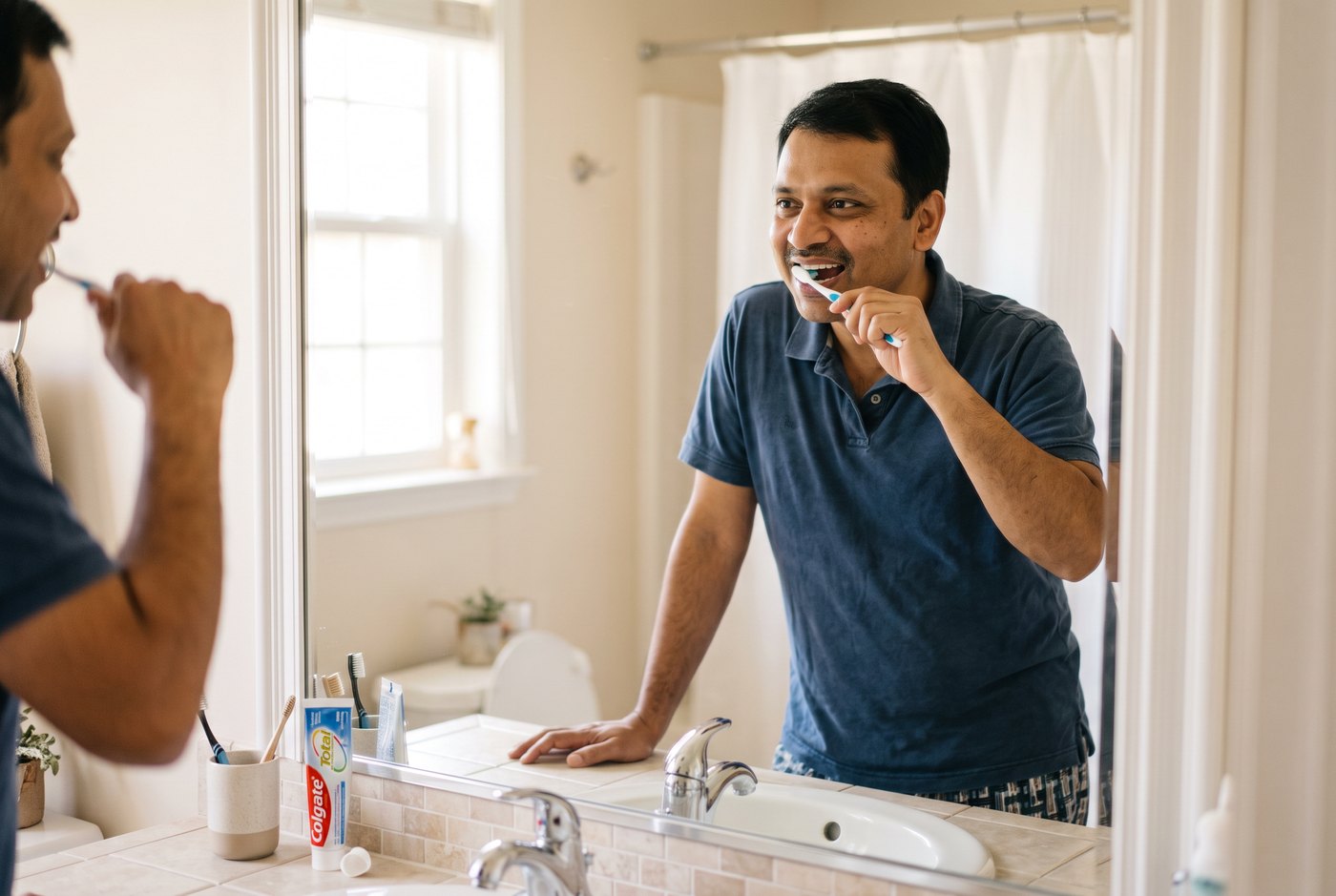
Almost everyone brushes. Far fewer people brush in a way that actually removes plaque from the places it does damage. The two most common mistakes we see are brushing too hard and brushing for too little time — and the first one is worse than doing nothing at all in that spot.
Pressure is not cleaning
Plaque is soft. It has the consistency of yoghurt for the first day or so after it forms, and a soft brush moved correctly wipes it away without any force. Once it hardens into tartar, no amount of scrubbing at home will shift it — that needs an instrument in a clinic.
So the force does not help, and it does harm. Hard horizontal scrubbing wears a notch into the tooth right at the gumline, where the enamel is thinnest, and it pushes the gum margin back over years. Both are permanent. Receded gums do not grow back, and the exposed root surface underneath is softer than enamel and decays faster.
Hold the brush the way you would hold a pen, not the way you would hold a hammer. If the bristles are splaying outwards while you brush, you are pressing too hard. If a three-month-old brush already looks frayed and flattened, that is the same message.
The angle does the work
Plaque that matters most sits in the shallow groove where the tooth meets the gum. Pointing the bristles straight at the flat face of the tooth misses it entirely.
- Angle the brush head at roughly forty-five degrees to the gumline, so the bristle tips point slightly up towards the gum on the top teeth and slightly down on the bottom.
- Use small circles or short vibrating strokes, about one or two teeth wide, rather than long sawing sweeps across the whole arch.
- Do the outer surfaces, the inner surfaces and the biting surfaces of every tooth. The inner surfaces of the lower front teeth are the single most commonly skipped spot in the mouth, and it shows: that is where tartar builds up first in most people.
- Tilt the brush vertically to reach behind the front teeth, where a horizontally-held head simply does not fit.
Two minutes is longer than it feels
Ask most people how long they brush and they will say two minutes. Time them and the honest average is closer to forty-five seconds. It is not carelessness — two minutes genuinely feels like a long time when you are standing at a sink.
The fix that works is to stop counting and start dividing. Split the mouth into four quadrants — upper right, upper left, lower left, lower right — and give each one thirty seconds. Most electric brushes will buzz at you every thirty seconds for exactly this reason. If you use a manual brush, playing a song you know the length of works just as well.
Timing around meals
Brushing immediately after anything acidic is one of the few pieces of common advice that is actively wrong. Citrus, fizzy drinks, wine, vinegar and even fruit juice soften the surface of the enamel for a short while. Brushing during that window scrubs away the softened layer.
Wait about thirty minutes after acidic food or drink before brushing, and rinse with plain water in the meantime. For the same reason, brushing before breakfast rather than straight after it is usually the better habit.
Toothpaste, and the rinse that undoes it
Use a fluoride toothpaste. Fluoride is what makes brushing a treatment rather than just a clean — it hardens the enamel surface and reverses very early decay before it becomes a cavity.
Then spit, and do not rinse. Rinsing with water immediately after brushing washes away the fluoride that was about to do its work. Leaving that thin film on the teeth is free, takes no extra effort, and is one of the most effective things you can change today.
Brushing alone cleans about three fifths of a tooth
Every tooth has five surfaces. A brush reaches three of them. The two surfaces pressed against the neighbouring teeth are where a large share of adult cavities and gum disease begin, and no brush — manual or electric, however expensive — reaches into that contact.
Floss or interdental brushes cover it. Interdental brushes are easier to use well and are usually the better choice for adults with any gap at all between the teeth; floss is for tight contacts. Once a day is enough, and the time of day does not matter as much as the fact that it happens.
Electric or manual?
An electric brush with a small round or oscillating head is measurably better than a manual one for most people, largely because it makes technique harder to get wrong and it stops you pressing. But a manual brush used correctly beats an electric one used badly. If you already brush well, the upgrade is modest.
Replace the brush
Every three months, or sooner if the bristles splay. A frayed brush cleans poorly and is a fair sign you have been pressing too hard. Replace it after any throat infection too.
See a dentist if
- Your gums bleed when you brush, and it has not settled within a couple of weeks.
- You can see or feel a notch or step in a tooth at the gumline.
- Your gums look like they have moved back, or a tooth looks longer than it used to.
- You have persistent bad breath or a bad taste despite brushing well.
- Anything hurts. Pain is late information in dentistry, not early.
This is general guidance, not a diagnosis. Mouths differ, and what is right for your teeth depends on what an examination finds.
Not sure your technique is doing the job? A check-up and a clean will tell you in one visit, and we will show you what to change.